Parts of a Watch: Every Component, Named and Explained
A plain-English tour of watch anatomy, from case and crown to movement and rotor, with what each part does and which ones you can swap yourself.

The main parts of a watch are the case, crystal, bezel, crown, dial, hands, movement, case back and strap or bracelet. Each one has a single job, and on an automatic dive watch most of them can be swapped or replaced at home with basic tools.
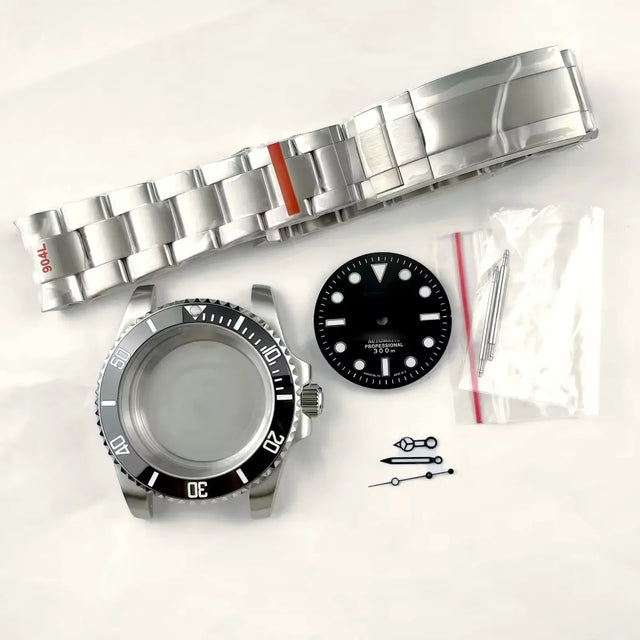
The easiest way to learn them is to hold every piece in your hand, which is what the Prodi Dive Kit lets you do.
What are the parts of a watch called?
From the outside in: strap or bracelet, case and lugs, bezel, crystal, crown and stem, dial, hands, movement and case back. The table below names each one and what it does.
| Part | What it does | Swappable at home? |
|---|---|---|
| Case | The metal body that holds everything | Yes, by moving the parts to a new case |
| Lugs | Arms on the case that hold the strap | Part of the case |
| Bezel | Ring around the crystal; on a dive watch it turns to time a dive | Possible, with care |
| Crystal | The clear cover over the dial | Usually a shop job |
| Crown | Knob used to wind and set the watch | Yes, with a matching stem |
| Stem | Rod linking the crown to the movement | Yes, may need cutting |
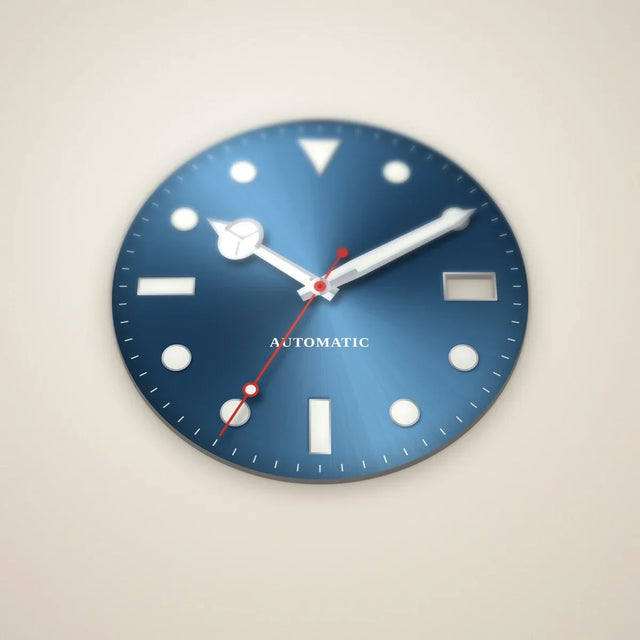
| Dial | The face with markers and date window | Yes |
| Hands | Hour, minute and seconds pointers | Yes |
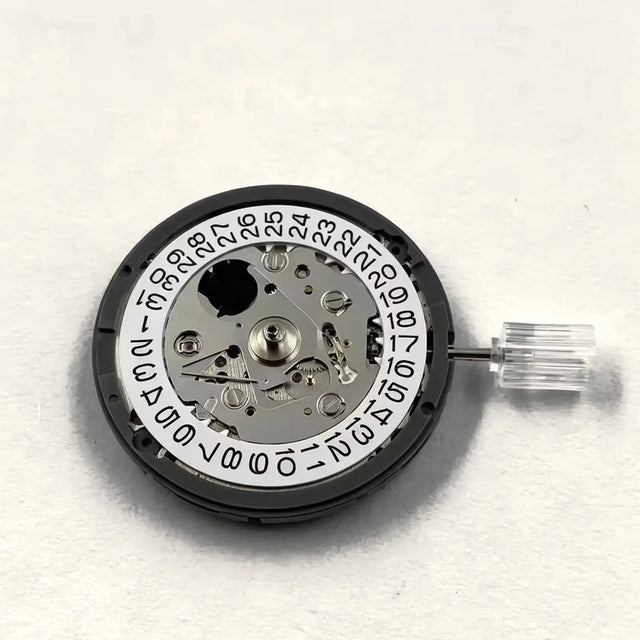
| Movement | The engine that keeps time | Yes, if the new one fits the case |
| Rotor | Weighted half-disc that winds an automatic | Part of the movement |
| Case back | The cover on the back of the case | Opens with a case opener |
| Strap or bracelet | Holds the watch on your wrist | Yes, easily |

Every part, in your hands
Prodi Dive Kit 40mm Automatic
$299 Standard automatic · $399 Seiko TMI NH35A
40 mm 316L steel case · 28.5 mm dial · hands · movement · bracelet and strap · tools
See the kitWhat does each part of the watch do?
The case protects, the movement keeps time, the dial and hands show it, and the crown lets you wind and set it. Everything else either seals the watch or holds it on your wrist.
The case is the frame. On our kit it is 40 mm of 316L steel, with the crystal and bezel already fitted. Gaskets inside the case, crown and back keep out water and dust.
The movement is the part that keeps time. In an automatic watch, a spring stores energy and releases it in steady beats. The Seiko TMI NH35A, for example, beats 21,600 times an hour and runs about 41 hours on a full wind. The rotor spins as you move your wrist and winds the spring for you. Our guide to the NH35A movement explains it in more depth.
The dial and hands are what you read. The dial carries the markers and a date window, and the hands sit on posts at the center of the movement. Our 28.5mm watch dial guide covers dial sizes.
The crown and stem connect you to the movement. On the NH35A, the crown pushed in winds the watch, the first click sets the date and the second click sets the time and stops the seconds hand.
Which watch parts can you replace yourself?
The strap, bracelet, dial, hands, crown, stem and even the movement are all home jobs on a kit-style watch. The crystal and bezel are better left to a shop.
This is what makes building and modding watches so approachable. Because the case, dial and movement follow common sizes, you can change the look of a watch by swapping one part. Our kit includes a bonus second dial and set of hands for exactly that reason. If you want to see how all the parts come together, read our guide on how to build your own watch kit.
What watch terms should you know?
A handful of words come up again and again. Learn these and you can follow almost any watch guide.
- Automatic: a mechanical watch wound by the rotor as you move.
- Caliber: another word for a specific movement model, such as the NH35A.
- Jewels: synthetic bearings in the movement that reduce wear. The NH35A has 24.
- Hacking: the seconds hand stops when you pull the crown to set the time.
- Quickset date: the date can be changed directly with the crown.
- Lug width: the gap between the lugs, which sets the strap size. Ours is 20 mm.
- Power reserve: how long the watch runs when fully wound and left still.
How do you find each part on your own watch?
Work from the outside in. Most parts are visible without opening anything.
- Look at the strap or bracelet and the lugs that hold it.
- Find the bezel around the crystal and see whether it turns.
- Locate the crown on the side and gently pull it to feel its positions.
- Read the dial: markers, date window and the three hands.
- Turn the watch over to see the case back. A display back shows the movement and rotor.
The bottom line
Once you know the parts of a watch, every watch becomes easier to understand, choose and care for. If you would rather learn by doing, the Prodi Dive Kit puts each part in your hands, and it makes a thoughtful idea for a boyfriend who likes watches too.
Frequently asked questions
What is the most important part of a watch?
The movement, because it keeps the time. Everything else protects it or displays what it does.
What is the knob on the side of a watch called?
The crown. It winds the watch and sets the date and time.
What is the ring around the watch face called?
The bezel. On a dive watch it turns so you can track elapsed time.
What holds the strap to the watch?
Spring bars, which fit between the lugs on each side of the case.
Are watch parts standard sizes?
Many are. Movements, dials and lug widths follow common sizes, which is why parts can be swapped.
Keep reading