7 Watch Building Mistakes and How to Avoid Them
From dust under the crystal to scratched lugs, we list seven first-build errors with their causes, simple ways to prevent them and how to fix each one.

The most common watch building mistakes are dust under the crystal, bent or misaligned hands, a dial that is not seated, a loose stem, a pinched case back gasket, scratched lugs and changing the date at the wrong hour. Each one has a simple cause and an easy way to avoid it.
Most of these come down to having the right tool within reach, which is why we put together the Bench Tool Kit for first builds.
What are the most common watch building mistakes?
Seven mistakes cover most first-build problems. The table below lists each one with its cause, how to avoid it and how to fix it if it happens.
| Mistake | Cause | Avoid it | Fix it |
|---|---|---|---|
| 1. Dust under the crystal | Open dial left uncovered | Blow off each part, cover between steps | Open the back, lift out, blow clean |
| 2. Bent hands | Pressing with a finger | Use a hand presser | Lift off, flatten or use the spare set |
| 3. Date changes at noon | Hands fitted 12 hours off | Fit hands just after the date flips | Lift the hour hand and refit |
| 4. Dial tilted or off-center | Foot not seated or bent | Lower flat, press around the edge | Lift, straighten foot, refit |
| 5. Crown pulls out or sits proud | Stem not locked or too long | Push until it clicks, test all positions | Relock or trim the stem |
| 6. Pinched gasket | Gasket out of its groove | Seat it flat before closing | Open, reseat, close by hand first |
| 7. Scratched lugs | Spring bar tool slips | Tape the lugs, work slowly | Light marks can be polished by a shop |

The right tool, every step
Bench Tool Kit, 145 Pieces
$69
Case opener · tweezers · screwdrivers · spring bar tool · link remover · zip case
See the tool kitWhy does dust end up under the crystal?
Because the dial sits open for most of the build, and a single fiber from a sleeve or towel shows up clearly once the crystal is on.
Dust is a very common first-build problem. Work on a smooth mat, not a towel, and wear short sleeves or roll them up. Use a hand blower, not your breath, before the hands go on and again before casing. If you step away, cover the movement with a clean cup. If a speck still gets in, it is a reopen, not a ruin: open the back, lift the movement out and blow it clean.
Why do hands bend or point the wrong way?
Bent hands come from uneven pressure, usually a fingertip. Misaligned hands come from fitting them at a random time instead of at the date change.
A hand presser spreads force evenly around the post. Fingers push from one side, so the hand tips and bends at the center. For alignment, turn the time until the date just flips to midnight, then fit the hour and minute hands at 12. Our guide on how to install watch hands covers clearance between hands, which is the other half of this mistake.
What goes wrong with the dial and stem?
A dial with one foot not seated sits tilted, and a stem that is not locked pulls out or leaves the crown standing proud.
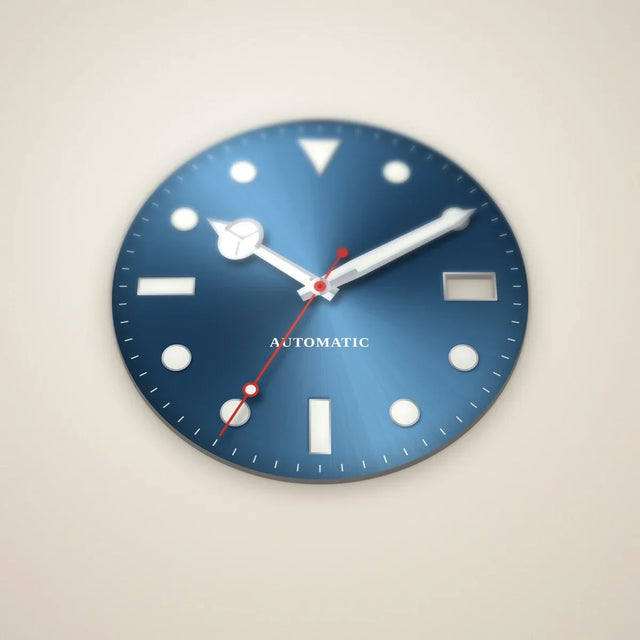
Lower the dial flat and press around its edge, never at one point. Check the date number is centered in the window before you fit the hands. Our guide on how to fit a dial on an NH35 explains the feet and window in detail.
For the stem, push until you feel a click, then pull the crown through all three positions: in to wind, first click for the date, second click for the time. If you are working with loose parts and the crown stands away from the case, the stem is too long. Our guide on how to cut an NH35 crown stem shows how to trim it safely.
How do you avoid case back and lug damage?
Seat the gasket flat and start the case back by hand. For the strap, cover the lugs with tape and keep the spring bar tool pointed away from the case.
A screw-down back that resists in the first turn is cross-threaded. Back it off and start again rather than forcing it with the opener. Snug is enough. Then, when fitting the bracelet or strap, a spring bar tool that slips will leave a line on polished lugs. A strip of low-tack tape on each lug is the easy fix. Our guide to the 20mm rubber watch strap covers strap fitting.
Which other mistakes can damage the watch later?
Two: changing the date late at night and swimming before a pressure test.
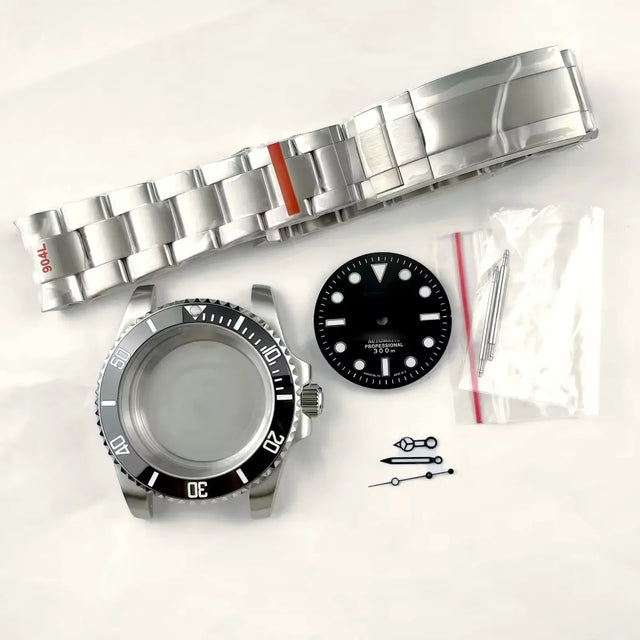
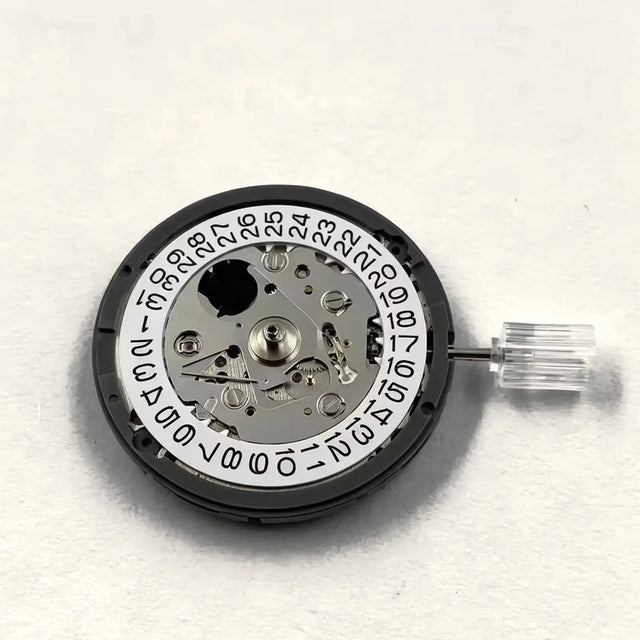
On the NH35A, avoid changing the date between about 9 p.m. and 3 a.m., when the date mechanism is already engaged. Set the time past 6 a.m. first, set the date, then set the correct time. And while our case is rated 300 m by its maker, any home build should be pressure-tested by a watch shop before it goes in water.
What checklist prevents most mistakes?
Set up your bench before you start and check each stage before moving on. This list takes a few minutes and saves most redos.
- Clear a well-lit table and lay down a smooth, light-colored mat.
- Lay out the hand presser, movement holder, tweezers, blower and case opener.
- Put on finger cots or gloves before touching the dial.
- Read the whole build guide once before starting.
- After the dial: check it is flat and the date is centered.
- After the hands: check alignment at the date change and clearance from the side.
- After casing: test all three crown positions and look for dust.
- After closing: tape the lugs before fitting the strap.
For the full step order, see our guide on how to build a watch.
The bottom line
Almost all watch building mistakes come from rushing or using the wrong tool, and almost all of them can be undone. Work slowly, check each stage and keep the right tools within reach with our Bench Tool Kit.
Frequently asked questions
What is the most common first-build mistake?
Dust under the crystal is one of the most frequent. It is easy to fix by opening the back and blowing the dial clean.
Can I ruin a movement on my first build?
It is unlikely if you avoid forcing parts, cut stems outside the movement and do not change the date late at night.
Can I fix bent hands?
Lightly bent hands can be flattened. Kinked hands should be replaced, and our kit includes a spare set.
Why does my crown not screw down?
The stem may be too long, or the crown threads may be cross-threaded. Check the length and start the threads gently.
Do I need to pressure-test my build?
Yes, before it goes in water. A watch shop can do this for you.
Keep reading