904L vs 316L Steel: What It Means for a Watch Bracelet
A plain comparison of the two stainless steel grades used in watches, covering rust resistance, polish, cost and whether a 904L bracelet upgrade is worth it.

If you are asking what is 904L steel, it is a high-alloy austenitic stainless steel with more nickel and molybdenum than common 316L, plus some copper, which gives it stronger resistance to corrosion and a bright polished look. For a watch bracelet, both grades work well; 904L is a step up in finish and chemical resistance rather than a must-have.
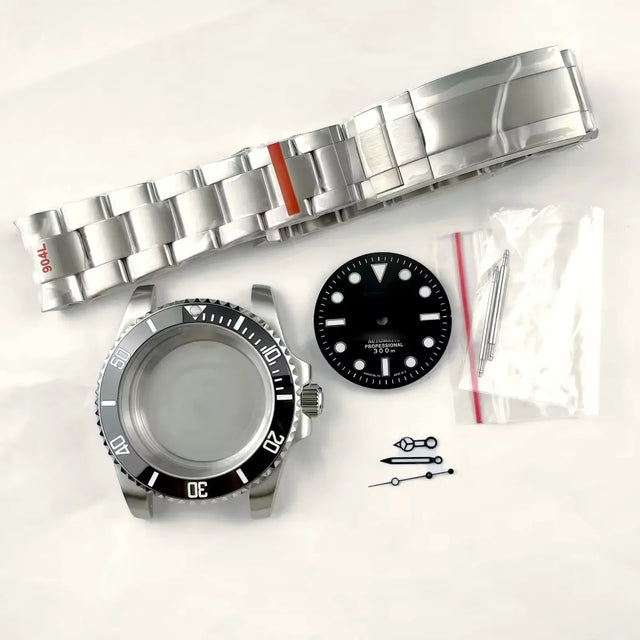
You can see 904L on the wrist in our 5-Link Bracelet 20mm in 904L steel.
What is 904L steel, and how is it different from 316L?
Both are austenitic stainless steels. 316L is the standard for watch cases and bracelets, while 904L adds more alloying elements for extra corrosion resistance.
Stainless steel resists rust because chromium forms a thin, self-healing oxide layer on the surface. Grades differ in how much chromium, nickel and molybdenum they carry. 316L contains roughly 16 to 18% chromium, 10 to 12% nickel and 2 to 3% molybdenum, with low carbon (the "L") to improve corrosion resistance around welds. It is widely used in dive watches, medical tools and marine hardware.
904L sits further up the scale. It is richer in nickel and molybdenum and includes copper, a mix designed for harsh chemical environments such as acid handling. It is also more expensive and harder to machine, which is why it is less common in watches. Our Prodi Dive Kit case is 316L, which is the grade most of the watch world relies on.

Bracelet upgrade
5-Link Bracelet 20mm, 904L Steel
904L stainless steel · 20 mm lug width · Five-link design
See the braceletHow do 904L and 316L compare for a watch?
For daily wear, the differences are modest. 904L wins on chemical resistance and polish; 316L wins on cost and availability.
| Trait | 316L | 904L |
|---|---|---|
| Steel family | Austenitic stainless | Austenitic stainless, higher alloy |
| Corrosion resistance | Very good, the watch industry standard | Higher, especially against acids and chlorides |
| Look when polished | Bright, slightly cooler tone | Often described as brighter and warmer |
| Machining and cost | Easier, lower cost | Harder to machine, higher cost |
| Magnetic | Essentially non-magnetic | Essentially non-magnetic |
Does 904L resist rust better than 316L?
Yes, 904L has higher resistance to pitting and acid attack. In normal wear, though, a well-made 316L bracelet will not rust either.
What people call rust on a steel watch is often surface staining, sometimes called tea staining, from salt and sweat left in the gaps between links. It sits on the surface and wipes away with cleaning. Higher-alloy steel like 904L shows this less, but the real fix for either grade is a rinse with fresh water after the beach or pool and a regular clean. Swimming itself is about the case, not the bracelet: our case is rated 300 m by its maker, and any home build should be pressure-tested by a watch shop before it goes in water.
Does 904L polish differently?
Many people find 904L takes a deep, bright polish, but the difference is subtle and depends more on finishing quality than on the grade alone.
A bracelet with careful polishing and brushing in 316L can look better than a rushed 904L one. When you compare bracelets, look at the edges between brushed and polished surfaces, the fit of the links, and the clasp action. Those decide how a bracelet looks and feels after a month on the wrist far more than a steel grade printed on a box.
Is a 904L bracelet worth it?
It is worth it if you want an upgrade in finish and corrosion resistance, or a second bracelet with a different look. It is not needed for a watch to be durable.
- Check your lug width first. Our case and bracelets use 20 mm.
- Decide on the look: the 5-link style is dressier and shows more polished surface than a flat-link bracelet.
- Think about use. For sea swims or a lot of sweat, a rubber strap may still suit you better.
- Plan the fit. You will need to remove links, which a link remover from a basic tool kit handles.
- Keep the spring bars handy so you can swap back and forth between bracelet and strap.
If you are torn between steel and rubber, read our comparison of bracelet vs rubber strap, and see our guide to the 20mm steel watch bracelet for fitting details. A spare bracelet also makes a neat add-on gift; our gift ideas for a boyfriend who likes watches cover a few combinations. Building a modded watch from scratch? Start with our NH35 mod kit guide.
The bottom line
So what is 904L steel in practice? A higher-alloy stainless that resists corrosion better and polishes nicely, while 316L remains a fully capable standard. If you want that step up on the wrist, see our 5-Link Bracelet in 904L.
Frequently asked questions
Is 904L better than 316L for a watch?
It has higher corrosion resistance and a brighter polish, but 316L is durable and widely used. For most wearers both perform well day to day.
Is 904L stainless steel magnetic?
Both 904L and 316L are austenitic grades and are essentially non-magnetic in normal use.
Can 904L steel scratch?
Yes. It is not meaningfully harder than 316L, so it scratches with everyday knocks. Brushed surfaces hide marks better than polished ones.
Does 316L steel rust?
Not under normal wear. Salt or sweat left in the links can cause surface stains, which a rinse and a gentle clean remove.
Can I mix a 904L bracelet with a 316L case?
Yes. The tone may differ slightly side by side, but fit depends on lug width and end links, not on the steel grade.
Sources
- SAE 316L stainless steel: en.wikipedia.org/wiki/SAE_316L_stainless_steel
- Stainless steel: en.wikipedia.org/wiki/Stainless_steel
Keep reading