Do You Need a Watch Winder for an Automatic?
A situation-by-situation look at when a watch winder helps an automatic owner, how to set one up for an NH35, and whether it harms the movement.

Do you need a watch winder? For one automatic watch you wear most days, no: wearing it keeps it wound, and a quick hand wind restarts it after a weekend off. A winder earns its place when you switch between watches, want a watch set and ready to wear, or simply like seeing it run on a shelf.
If that sounds like you, our Single Watch Winder holds one watch and comes in four finishes.
Do you need a watch winder for an automatic watch?
Not to keep it healthy. A winder is a convenience that saves you resetting the date and time, not a requirement for the movement.
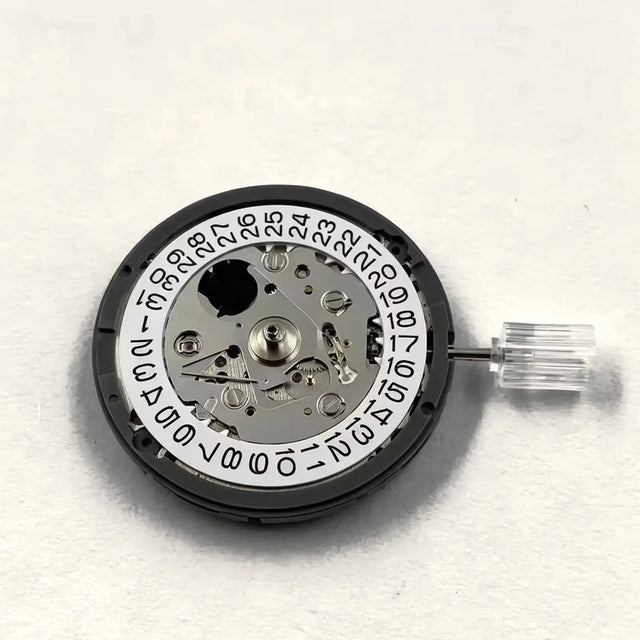
An automatic watch like the NH35 winds itself as you move. Take it off for longer than its reserve, about 41 hours for the NH35A, and it stops. Nothing is harmed when it stops. You wind it with the crown, set the time and date, and it carries on. That takes about a minute. So the real question is how often you face that minute, and whether it bothers you.
If you are unsure how to wind and set it, our guide on how to wind and set an automatic watch covers the crown positions and the safe date-setting order.

For the watch you switch out
Single Watch Winder
$169
Holds one watch · four finishes · keeps an automatic running off the wrist
See the winderWho should buy a watch winder?
People who own two or more automatics and switch between them, and people who want a watch ready to grab without resetting.
| Your situation | Need a winder? | Why |
|---|---|---|
| One automatic, worn daily | No | Wrist motion keeps it wound |
| One automatic, worn on weekends | Optional | You reset it once a week |
| Two or three automatics in rotation | Helpful | The one off the wrist stays set |
| A watch saved for occasions | Helpful | Ready to wear on the day |
| Desk worker with low wrist motion | Optional | Tops up the reserve overnight |
| Gift for an automatic owner | Good pick | Useful and on display |
If you switch watches mostly to change the look, remember you can also swap the band on one watch. Our guide to changing a watch strap shows how, and a 20 mm steel bracelet gives a dive watch a dressier side.
How do you set up a watch winder?
Wind the watch by hand first, set the time, then let the winder maintain it. Use the lowest setting that keeps it running.
A winder is designed to keep a running watch topped up, not to wind an empty one from zero. The NH35 winds in both rotor directions, so if your winder lets you choose direction, pick bidirectional. If it offers several speeds or turn counts, start low and work up.
- Hand wind the watch about 30 turns with the crown pushed in.
- Set the date and time, then push in or screw down the crown.
- Fit the watch onto the cushion snugly so it cannot slide.
- Choose bidirectional and the lowest setting, if your winder has settings.
- Check after two or three days: still running and on time? Keep that setting.
- If it stopped, raise the setting one step and test again.
Can a watch winder harm the movement?
Not in normal use. Automatic movements have a slipping clutch, so a full mainspring cannot be overwound by a winder.
The common concern is extra wear from running all the time. A watch on a winder runs just as it would on your wrist, so its parts age as they would with daily wear. If you prefer to rest a watch, simply let it stop in a box instead. Two practical cautions: keep the winder away from strong magnets such as speakers, and do not leave it in direct sun, which warms the watch and fades straps.
What can you do instead of buying a winder?
Build a simple habit: wind the watch by hand the morning you put it on, and set it with the date-safe order.
With an NH35, about 30 to 40 turns of the crown gets a stopped watch running well, and setting the time takes another minute. If that is fine for you, skip the winder. Another trick for weekend-only watches is a full hand wind on Friday evening, which keeps an NH35A running into Sunday. And if your watch stops during the week even though you wear it, check winding and fit before buying anything; a loose bracelet that slides around still winds the watch, but a watch left on a desk does not.
How much should you spend?
For one watch, a single winder is enough. Our Single Watch Winder is $169, and you only need more slots if you switch between several automatics at once.
If you have more watches than winders, store the rest in a box and wind them by hand the day you wear them. Our Wood-Grain Watch Box runs from $29 to $79 with 2 to 12 slots and a glass lid, which pairs well with one winder for your current favorite.
The bottom line
So, do you need a watch winder? Not for one watch worn daily, but it is a real time saver if you switch between automatics or keep one for occasions. If that is you, the Single Watch Winder keeps your watch set and ready.
Frequently asked questions
Is a watch winder worth it for one watch?
Only if you take it off for days at a time and dislike resetting it. Daily wear needs no winder.
Does a winder wear out my watch faster?
It runs as it would on your wrist, so wear is the same as daily use.
Can I leave my watch on a winder all the time?
Yes. The slipping clutch prevents overwinding. Rest it in a box if you prefer.
Which direction should I choose for an NH35?
Bidirectional. The NH35 rotor winds in both directions.
Do quartz watches need a winder?
No. Quartz watches run on a battery. A winder only helps automatics.
Sources
- Caliber Corner, NH35A specifications: calibercorner.com/seiko-caliber-nh35a
- Wikipedia, Automatic watch: en.wikipedia.org/wiki/Automatic_watch
Keep reading